Garden landscaping in Osterley
If you are looking for garden landscaping in Osterley, you may already have a clear idea of what you want your outdoor space to feel like: practical, welcoming, private, and easy to enjoy throughout the year. Whether you live near Osterley Park, in one of the residential streets close to Isleworth, or in a home with a compact back garden that needs better layout and structure, the right landscaping approach can transform how your garden works for day-to-day life.
Garden landscaping is not just about making a space look neat. It is about improving how you use it. That might mean creating better access, introducing paths and seating areas, solving drainage concerns, reworking planting, adding borders, or reshaping a tired layout so it suits family life, entertaining, low-maintenance living, or a more polished finish for a commercial property.
For local homeowners and businesses in Osterley, a well-planned landscape can bring real long-term value. It can help a garden feel larger, more organised, and more connected to the house or building. It can also make outdoor maintenance simpler, which matters if you have a busy schedule, limited access, or a property where the outside space needs to stay presentable without constant effort.
Why garden landscaping matters for Osterley properties

Osterley has a mix of property styles, from period homes and family houses to modern developments and mixed-use commercial buildings. That variety means no single landscaping solution fits every site. A good local team takes into account the shape of the garden, the age of the property, access through side paths or shared driveways, and how much sunlight, shade, and privacy the space receives during the day.
In many local gardens, the challenge is not a lack of space but a lack of usable space. Long narrow gardens may feel broken up or unbalanced. Courtyards may need more structure. Front gardens may need a smarter layout to improve kerb appeal while still allowing room for bins, bikes, and everyday movement. Professional landscaping can address these issues with practical design rather than cosmetic changes alone.
For business owners, landlords, and property managers in and around Osterley, the outside area often needs to do a different job. It may be the first thing clients see, a shared space for staff, or simply a frontage that has to look maintained and professional. Garden landscaping in Osterley can include hard landscaping, planting, lawn replacement, edging, surfacing, and more, all tailored to the property type and the use it serves.
What garden landscaping can include
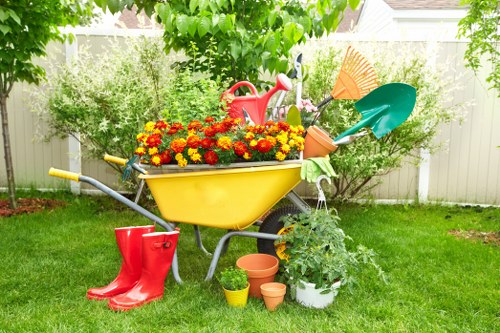
Landscaping services can be broad, and the best results usually come from combining several elements rather than changing one feature in isolation. Depending on your garden and goals, a local landscaping project may include a full redesign or targeted improvements to specific problem areas.
Common landscaping features include patios, paths, retaining edges, turfing, raised beds, new planting, decorative aggregates, fencing integration, and lawn reshaping. In some gardens, there may also be a need for better access routes, seating zones, or a more defined layout that separates entertaining space from planting beds and service areas.
For homes that are currently difficult to maintain, a landscaped garden can replace high-effort areas with more suitable materials and planting schemes. For example, a patchy lawn might be replaced with a more robust surface or redesigned borders that reduce future upkeep. Where a garden feels unfinished, landscaping can create the structure that brings all the elements together.
Typical services customers request
- Garden layout redesign
- Hard landscaping and soft landscaping
- Patios and paving areas
- Lawn replacement and turf installation
- Planting beds and shrub borders
- Decorative gravel and edging
- Fence-line improvements
- Drainage and surface-water solutions
- Low-maintenance garden upgrades
- Front garden improvements for kerb appeal
Designing a garden that suits how you live

A successful landscaping project starts with understanding how you want to use the space. Some customers want a family-friendly garden with room for children to play and adults to relax. Others want a neat, low-maintenance space that looks smart all year without demanding too much work. Some need a garden that can handle regular entertaining, dining, or the display standards expected by a commercial property.
It is also important to consider how the space connects to the property. A garden that opens directly from a kitchen or living room may benefit from a patio or terrace that creates a natural extension of the indoor space. A side return or rear garden may need circulation routes that make movement easier. Local landscaping planning helps ensure the final result looks good and functions properly, rather than simply adding features without purpose.
In Osterley, where some homes have compact plots and others have larger boundary gardens, the best designs are often the ones that use space efficiently. Smart proportions, clean lines, and carefully selected materials can make a dramatic difference. Even smaller gardens can feel calmer, wider, and more attractive when the layout is balanced and the planting is chosen to suit the conditions.
Useful design considerations
Before work begins, it helps to think about:
- How much time you want to spend on maintenance
- Whether you need play space, dining space, or planting space
- How much privacy you want from neighbouring properties
- Whether water pooling or poor drainage has been a problem
- How much sun and shade the garden receives
- Whether the garden needs to look presentable all year
Hard landscaping and soft landscaping working together

The strongest outdoor spaces usually combine hard landscaping and soft landscaping in a balanced way. Hard landscaping includes the built elements such as paving, paths, steps, edges, raised planters, and retained levels. Soft landscaping refers to planting, lawns, shrubs, trees, soil preparation, and other living features that bring colour, texture, and seasonal interest.
For many local clients, the key is getting the balance right. Too much hard surfacing can make a garden feel cold or stark. Too much planting without structure can make the space feel messy or difficult to maintain. A thoughtful landscaping plan creates clear zones, strong circulation, and planting that softens the edges without overwhelming the usable areas.
In and around Osterley, this balance can be especially useful where gardens are overlooked or where outdoor privacy matters. Strategic planting can screen views, while paving and defined lines make the area look more polished. If you have an older garden that has become uneven, overgrown, or fragmented over time, a combined approach can restore clarity and make the whole property feel better maintained.
Examples of practical improvements
- Replacing worn paths with durable paving
- Creating a seating area next to the house
- Adding raised beds for structure and easier planting
- Introducing lawn edging to keep borders tidy
- Improving transitions between garden zones
- Using planting to soften walls, fences, or outbuildings
Landscaping for front gardens, back gardens, and side access areas

Different parts of a property call for different approaches. A front garden often needs to look smart, accessible, and easy to maintain. A rear garden might need to feel more private and comfortable. Side access spaces are often overlooked, but they can play a big role in daily convenience, drainage, storage, and movement around the property.
Front garden landscaping in Osterley may involve replacing tired paving, improving planting around entrances, or creating a cleaner layout that looks neat from the street. For homes on busier roads, front boundaries, planting, and boundary treatments can improve privacy and reduce the feeling of exposure. For properties with limited frontage, the aim is often to maximise the visual impact without making access awkward.
Rear gardens usually offer more room for creativity. They may be redesigned into a family space, a quiet retreat, or a more stylish extension of the home. Side returns and narrow access points often need careful handling because they can be awkward for materials, machinery, and movement during the work. That is one reason a local team familiar with typical Osterley access conditions can be especially useful.
Front garden priorities
Many customers want front garden work to achieve one or more of these outcomes:
- Better kerb appeal
- Safer access to the home or building
- Cleaner boundaries and edges
- Less maintenance over time
- Improved parking or turning arrangements where space allows
How the service works
A reliable garden landscaping service should be straightforward from the first conversation to the final tidy-up. While every project is different, the process usually follows a clear sequence so you know what to expect and can make decisions with confidence.
Step 1: Initial discussion — This is where you explain what is not working, what you would like to change, and how you use the garden. It helps to share photos, measurements, and any practical concerns such as drainage, shade, access, or how much maintenance you want to avoid.
Step 2: Site assessment — A local landscaping team can look at the existing layout, levels, surfaces, soil conditions, boundaries, and access routes. In Osterley, this step is particularly helpful because gardens can vary significantly from one street to another, and the practical details matter as much as the design idea.
What happens during the project
Once the plan is agreed, the work typically begins with preparation and removal of any old or unsuitable features. This may include clearing overgrown areas, lifting old paving, regrading levels, or removing damaged turf and tired planting. After that, the new structure is put in place, followed by finishing details and planting.
Step 3: Installation — Depending on the scope of the job, this may include hard landscaping work, soil improvement, planting, edging, and finishing touches. A good team keeps the site organised and works in a way that suits the property, especially where access is tight or neighbours are close by.
Step 4: Final finish and handover — The garden is checked for detail, tidied, and prepared for use. If planting has been included, you may also be given practical advice on initial care, watering, and how the space will settle in during the first weeks and months.
For customers seeking garden landscaping in Osterley, this clear process helps reduce uncertainty and makes it easier to plan around home life, business operations, or seasonal timing.
Preparation checklist before landscaping starts
Preparing well can save time and help the project run more smoothly. It also ensures the landscapers can work efficiently without avoidable delays, particularly where access is limited or the garden backs onto neighbouring properties.
Before work begins, it is helpful to:
- Clear away movable items such as furniture, toys, pots, and ornaments
- Identify any fixed utilities, access gates, or shared pathways
- Discuss any drainage, wet patches, or pooling areas you have noticed
- Decide which parts of the garden you want to keep, re-use, or replace
- Consider whether you will need privacy screening or boundary improvements
- Make sure access routes are available for tools and materials
Where parking is tight or the garden can only be accessed through a narrow side passage, it is useful to talk this through in advance. Local teams working in Osterley and nearby areas such as Isleworth, Hounslow, Brentford, and parts of Southall are often familiar with these constraints and can plan accordingly.
Good preparation does not need to be complicated. It simply means making sure the job can start without avoidable obstacles and that the design reflects what you actually want from the space.
Pricing factors and what influences the cost
Every landscaping project is different, so costs can vary based on several practical factors rather than a simple flat rate. It is best to request a tailored quote after the site has been reviewed, as this allows the work to be scoped properly and avoids guesswork.
Typical pricing factors include:
- The size of the garden or outdoor area
- The amount of groundwork required
- Whether old materials need to be removed
- The type and quality of paving, timber, stone, or planting materials
- Any changes to levels, drainage, or access
- How much manual labour is required because of site constraints
- Whether the project includes planting, turfing, or structural features
For example, a simple refresh with new planting and edging will usually involve different work from a full redesign with new surfaces, raised beds, and level changes. Likewise, a property with easy access may be simpler to work on than one with narrow entrances, shared walkways, or restricted storage space for materials. This is especially relevant in built-up parts of Osterley where planning the logistics matters almost as much as the design itself.
Why choose a local landscaping company
There are real advantages to working with a local team for garden landscaping in Osterley. A local company is more likely to understand the style of nearby homes, the common issues seen in local gardens, and the practical realities of getting materials and equipment onto site without disruption.
Local knowledge helps with:
- Choosing designs that suit local property types
- Planning around parking and access challenges
- Working around neighbouring homes and boundary lines
- Understanding which materials suit the setting and maintenance level
- Responding quickly to site-specific questions or changes
It also helps when a project needs a practical rather than overly elaborate approach. Not every customer wants a showpiece garden. Many simply want an attractive, reliable outdoor space that feels finished and easy to live with. A local landscaper can balance appearance with practicality so the result works in real life, not just on paper.
If you are comparing options, ask how the team would approach your particular site, what challenges they expect, and how they would handle access, waste removal, and material delivery. Clear answers can tell you a lot about the quality of the service before any work begins.
Gardens for family homes, rentals, and commercial premises
Garden landscaping is not only for private homes. In Osterley, there are many types of properties that benefit from a well-organised outdoor area, and each one has its own priorities. A family home may need safety, play space, and low maintenance. A rental property may need durability and easy upkeep. A commercial frontage may need a polished, professional appearance with minimal disruption to daily operations.
For landlords and property managers, landscaping can be a smart way to improve first impressions and reduce future maintenance problems. For businesses, outdoor areas can contribute to the overall impression customers and visitors get when arriving on site. Even small improvements such as cleaner edging, smarter planting, and well-maintained hard surfaces can make a noticeable difference.
Residential and commercial customers often ask for:
- Low-maintenance planting schemes
- Durable surfaces that are easy to clean
- Clear access routes for residents, staff, or visitors
- Boundary planting for privacy and softness
- Neat, presentable outdoor spaces that stay tidy with less effort
Whether the project is for a home or business, the aim is the same: to create an outdoor space that looks intentional, functions well, and is suited to the way it will be used.
Areas covered around Osterley
A local landscaping service for Osterley usually covers nearby neighbourhoods and surrounding parts of West London where similar property types and access conditions are common. This can include residential streets, mixed-use areas, and properties close to transport routes or busy roads.
Areas frequently served may include Osterley itself, Isleworth, Hounslow, Brentford, parts of Southall, and neighbouring locations where homeowners and businesses need practical, well-finished outdoor improvements. The exact work can vary from a small refresh to a full garden redesign, depending on the site and the customer’s goals.
If you are not sure whether your property falls within the area covered, it is usually worth making an enquiry. A local team can often tell quickly whether the access, scale, and type of work are a good fit.
Frequently asked questions
How long does a landscaping project usually take?
The timescale depends on the size and complexity of the work. A smaller garden refresh may take much less time than a full redesign involving new paving, drainage, planting, and level changes. The best way to understand the timeframe is to request a site-specific assessment.
Can you landscape a small garden?
Yes. Small gardens often benefit greatly from thoughtful landscaping because every metre needs to work hard. Better layout, clever planting, and well-chosen surfaces can make a compact space feel more open and usable.
What if my garden has poor drainage?
Poor drainage is a common issue and should be addressed as part of the project rather than ignored. A proper assessment can help identify whether the problem is caused by levels, soil conditions, compacted ground, or surface run-off.
Do I need a full redesign, or can you improve just part of the garden?
Not every job needs a complete overhaul. Many customers choose to improve just one section, such as a seating area, front garden, or planting zone. Targeted changes can still make a big difference.
Can landscaping help with low maintenance?
Yes. If you want a garden that is easier to manage, the design can reduce unnecessary upkeep by using suitable surfaces, controlled planting, and a layout that makes routine care simpler.
How do I get started?
Start by thinking about what is not working in the current garden and what you want the finished space to do. Then request a free quote or contact us today to discuss the project and arrange an assessment.
What makes a good landscaping result?
A good result is not just visually attractive on completion day. It should continue to work well once you start using it. Paths should feel natural to walk on. Seating areas should be placed where they make sense. Planting should suit the soil and conditions. Maintenance should be manageable. And the whole space should feel like a considered part of the property rather than an afterthought.
Strong landscaping usually delivers:
- A clearer layout
- Better use of available space
- Improved appearance from inside and outside the property
- More privacy or better screening where needed
- Reduced maintenance and easier everyday care
- A finish that suits the style of the home or business
In a place like Osterley, where gardens can range from compact urban plots to more generous family spaces, the best work is usually the work that respects the character of the property while improving day-to-day usability. That is where a thoughtful local approach makes all the difference.
If you are ready to improve your outdoor space, book your service now and take the first step towards a garden that feels more useful, more attractive, and better suited to your property.