Health and Safety Policy for Landscaping Osterley
 This health and safety policy sets out the standards required for safe, consistent, and responsible landscaping services. It applies to all outdoor work activities, including planting, turfing, pruning, paving, maintenance, and the operation of tools and machinery. Our approach is built on prevention, supervision, and clear communication, with a focus on protecting workers, clients, visitors, and the public.
Every landscaping task carries some level of risk, from manual handling and slips to exposure to weather and moving equipment. We reduce these risks by planning each job carefully, assessing conditions before work begins, and making sure suitable controls are in place. Safety is treated as a core part of work quality, not an extra step.
All personnel are expected to follow safe working practices at all times. This includes wearing suitable personal protective equipment, using tools correctly, maintaining awareness of surroundings, and reporting hazards immediately. A safe site is the responsibility of everyone involved, and no task should proceed if it creates avoidable danger.
 Before any landscaping work begins, a site assessment should identify hazards such as uneven ground, hidden debris, overhead obstructions, unstable surfaces, electrical risks, and public access points. Controls are then selected to reduce those risks, which may include barriers, warning signs, restricted work zones, or changing the method of work.
Weather conditions also play an important role in safe landscape maintenance. Heavy rain, high winds, frost, and extreme heat can affect visibility, traction, equipment handling, and worker wellbeing. Teams should adapt schedules where necessary, pause work if conditions become unsafe, and ensure adequate hydration, rest, and shelter when needed.
Manual handling is a significant concern in gardening and grounds work. Soil bags, paving materials, equipment, and waste can all cause strain or injury if lifted incorrectly. Workers should use mechanical aids where possible, share heavy loads, and apply proper lifting techniques. Repetitive tasks should also be varied to reduce fatigue and overuse injuries.
 The safe use of tools and machinery is essential to any landscaping policy. Only trained and authorised workers may operate powered equipment such as mowers, trimmers, hedge cutters, and compact machinery. Equipment must be inspected before use, kept clean, stored securely, and removed from service if any defect is found. Guards, safety devices, and emergency stop functions must never be bypassed.
Fuel, batteries, sharp blades, and electrical cables require particular attention. Refuelling should take place in a controlled area away from ignition sources, while battery charging must follow manufacturer guidance. Cables should be positioned to avoid trip hazards and damage, and sharp tools should always be carried and stored safely. Good housekeeping helps prevent avoidable incidents.
We also recognise the importance of protecting members of the public and any other people present on or near the work area. Safe access routes should be maintained where possible, and work zones should be clearly marked. When operating noisy or high-risk equipment, additional care must be taken to keep bystanders away from the immediate task area.
Responsibilities and Safe Working Standards
Managers and supervisors are responsible for planning work safely, providing suitable instruction, and monitoring compliance with this policy. They must ensure that risk controls are understood before work starts and that any concerns are addressed promptly. Where conditions change during the job, the plan should be reviewed and updated without delay.
Workers are expected to act responsibly, report near misses, and stop work if they believe a task is unsafe. They should never use damaged equipment or ignore a known hazard. Personal protective equipment must be worn as required, including gloves, eye protection, hearing protection, safety footwear, or high-visibility clothing depending on the nature of the task.
Training is an important part of maintaining safe standards in landscape safety. New starters should receive induction on site hazards, emergency procedures, equipment use, and expected behaviour. Refresher training should be provided when processes change, new machinery is introduced, or an incident indicates that further instruction is needed.
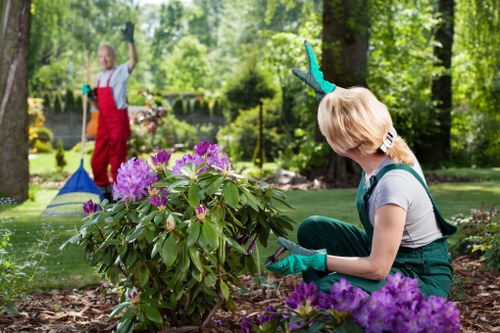 First aid supplies should be readily available and at least one competent person should be able to respond to minor injuries while waiting for further help if required. Cuts, strains, eye injuries, heat stress, and contact with plants or chemicals can all happen during landscaping work, so workers must know how to report an incident and seek prompt attention.
Chemical products such as fertilisers, herbicides, and cleaners must be handled with care. Labels and instructions should always be followed, and suitable storage should be used to prevent leaks, contamination, or accidental mixing. Where chemicals are unnecessary, safer alternatives should be considered to reduce exposure and environmental impact.
Housekeeping and site tidiness support safer operations throughout the day. Tools should not be left in walkways, waste should be removed regularly, and materials should be stacked securely. Clear access reduces trips and helps ensure that emergency action can be carried out quickly if needed.
Emergency readiness is part of this policy. Work teams should know what to do in the event of fire, serious injury, severe weather, vehicle movement, or a hazardous release. The site response must be calm, organised, and based on protecting people first. Unsafe areas should be isolated immediately until the issue is resolved.
Any incident, near miss, unsafe condition, or equipment failure should be recorded and reviewed. Learning from these events helps improve procedures and prevent recurrence. Where necessary, corrective action should be taken, and the policy should be updated to reflect new risks or better methods.
 This health and safety policy for landscaping will be reviewed regularly to confirm that it remains suitable, effective, and aligned with day-to-day work practices. By maintaining high standards, encouraging accountability, and making safety part of every task, we support a reliable and professional service where people and property are properly protected.